

What is a “buy out”?
A mortgage buy out is one solution if you and your partner separate but one partner wants to keep the house. A buy out involves one partner purchasing the equity interest of the other. It can be done relatively easily in New Zealand with a separation agreement.
Read on to find out everything you need to know about mortgage buy outs. If you still have a question, feel free to get in touch with Agreeable’s team and we will be happy to help!
Need a Separation Agreement? Click here to learn more about Agreeable’s online service.
Steps to buying your partner out
To buy someone out of a house, you need to be able to take on the whole mortgage yourself, and have enough to pay your partner for their share of the equity in the property. Here are some steps that we recommend taking:
- You’ve already made a great start by reading this article. For more general information on separation, we also recommend MoneyHub NZ’s guide here.
- Get a valuation on the family home or properties to be divided. You can simply agree on the value and use this as the basis of your agreement, but a valuation is best if there is any doubt, or just to be sure.
- Agree on your partner’s “buy out price”. Typically, this is the equity that you hold in the home (home value less the mortgage balance) divided by two. However, some Kiwis like to adjust this figure based on the parties’ contributions to the deposit or mortgage payments. There isn’t necessarily a right answer, as long as it is fair and you both agree.
- Get a separation agreement built & certified with Agreeable. Most banks require a separation agreement to change the mortgage over. Agreeable is New Zealand’s fastest, easiest, and most cost-effective way to build an agreement, and we also connect you to two lawyers (one each) for the online advice & certification. We provide it all at a fixed cost, and online, so you don’t have to leave home! Kiwis usually save over $1,000 by certifying with Agreeable, compared to the “traditional” way.
- Settle your new mortgage (if necessary).
The first question to ask:
The first question you should ask yourself is if you are financially in a position to afford the mortgage payments. Secondly, will the bank agree to you being the sole mortgagee?
Note that when you separate, you are (usually) splitting half the proceeds from whatever you both sell – including the Family Home. You are left with half (or thereabouts) and must start a new life on this amount. Think carefully before committing to selling the Family Home. It may be a better financial decision to buy out your partner – or not depending on your own financial situation.
Is your partner buying out your share?
If your spouse wants to keep the home, make sure you obtain an appraisal if you cannot agree on the value of the Family Home. Also, you may have to adjust to the fact that it is no longer your home and this may mean unfamiliar people living in it.
Your obligations to the bank
If you are the party being released from your mortgagee obligations, ask for the bank’s proof that they have discharged you from your obligations i.e. check you are no longer on the mortgage.
This may need to be done after you have obtained a Separation Agreement, as some banks request to see this for obvious reasons before they take one partner’s name off the mortgage.
What are your other options if you cannot afford the mortgage yourself?
If your mortgage payments are almost paid off and you and your partner are on amicable terms, then you could agree to continue to pay the mortgage until it ends.
This is ideal and possibly not the option many can take. In this situation, it may still be untenable for your partner to stay living in the house while you both pay off the mortgage. In this case, the partner who is having their share bought out, will have to negotiate rent.
Can the buyer withdraw their KiwiSaver to help?
It is possible, but it depends on your KiwiSaver provider and your circumstances. In general, the person withdrawing must be eligible under the provider’s policies, and the provider will often require a “court order” to release the funds, which can take a few weeks to process. The best first step, if you are likely to withdraw one partner’s KiwiSaver for a separation agreement, is for that person to get in touch with their provider and ask for their requirements to approve a withdrawal. This will make your separation agreement certification much smoother, as the lawyers will have a clearer idea on your ability to withdraw.
Also, there is likely to be an extra cost for KiwiSaver withdrawal, often $1,500-$2,000, consisting of a $700 court filing fee and a lawyer’s help with the forms involved. The paperwork can be complex without a lawyer, and often the provider requires you to have one anyway. If you are certifying a separation agreement through Agreeable, the lawyer that we arrange for the withdrawing partner can usually help with the KiwiSaver withdrawal, but the extra cost won’t be included in Agreeable’s quote. We can get a cost indication for you at the same time as presenting our quote for certification.
Can you substitute someone else on the mortgage?
It will be hard to sell the Family Home with negative equity. Unless you are able to negotiate other terms with your mortgage provider then you will both continue to be liable for the mortgage repayments. Potentially you could substitute your spouse for other family members or friends who are interested or able to support you in the mortgage if you decide to keep the house. If you decide to go with this option, it is a good idea first to have already brought-out your spouse.
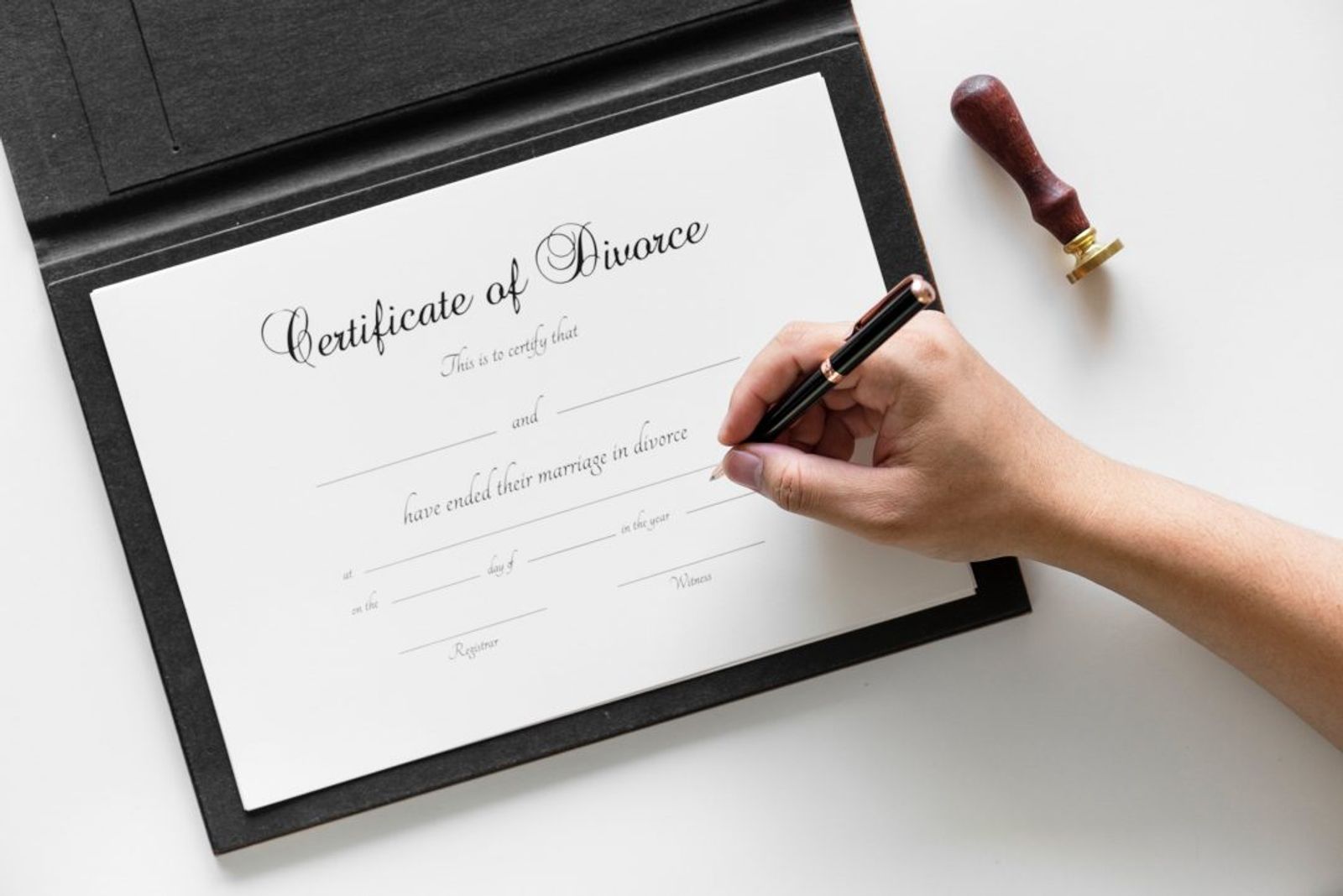
The Family Home is relationship property, and after separating, you may be thinking about buying out your partner’s share to keep it.
What will the buy out price be?
A buy out means you must identify the equity in the property – the difference between the mortgage balance and what the property is currently
worth.
It’s not always going to be an equal split when you separate from your partner – you can decide what the most fair buy out price is, as long as you both agree. This may be the case if one partner’s family helped to improve the value of your home by providing money for renovations, or perhaps one of you contributed more to the deposit of the home.
How do you calculate the buy out price?
Assuming both parties contributed equally to the deposit and the ongoing mortgage payments, the calculation is relatively straightforward.
Specifically, determine the current market value of the property, ideally by engaging professional valuers to ensure an accurate assessment. From this value, subtract the outstanding mortgage balance as well as any other expenses that were not shared equally. The remaining amount should then be divided equally between both parties.
Example of buy out calculations
For example, if the property is currently valued at $500,000 and there is $250,000 remaining on the mortgage, you would need $125,000 to buy out your ex-partner’s share of the property.
If, however, $100,000 was provided by your parents as a loan for either the deposit or renovations this amount must be repaid first. For instance, if there is no outstanding mortgage and you are dividing the sale proceeds, you and your ex-partner would be splitting $400,000 rather than $500,000.
In a scenario where you wish to buy out your partner’s share while $250,000 remains on the mortgage, you would need to repay the $100,000 loan first. If the loan from your parents is considered a gift, you would then require $75,000 to complete the buyout.
How to get a valuation on your Family Home or other properties
The buyout price outlined above depends on the current value of the home if you are retaining the family property. Please note that your bank may also require a valuation from a registered property valuer before refinancing the mortgage in your name.
Valuation
It is important to obtain a valuation from a certified, registered valuer, as this will establish the current market value of the property.
A registered property valuer draws on their expertise and experience, combining detailed observations with research on the property and its surrounding area, to determine an accurate market value.
The cost of a property valuation typically ranges from $500 to $800 plus GST. Valuations, however, have a limitation period and are generally considered “current” for only three to six months. Your ex-partner may agree to share the cost of the valuation.
Certificate of Title
Firstly, it is important to get a copy of the Certificate of Title of your property to check whether your name is on it. Importantly, you will need to get your partner’s name off the Title to the property once they no longer have any interest in it.
For instance, if you do not do this, your partner could put a registered interest against your property (a caveat). In other words, this is a notice that someone else has an interest in this property. This cannot be lifted unless by consent or by a hearing.
What if my name isn’t on the Title?
Even if your name is not on the mortgage or the property deed, this does not necessarily mean you have no rights or claims to the property. It is therefore advisable to seek legal advice.
If you have been living in the property or are in a de facto relationship with your partner, the family home may be considered relationship property unless a prenuptial agreement or contracting-out agreement is in place.
Download our free guide to Separation AgreementsHow to work out a Family Home Market Value yourself
Real estate agents
You can consult real estate agents in your area who are experienced with properties similar to yours. It may be helpful to obtain several estimates from different agents and use the average as a guide. However, keep in mind that if these agents are only considering comparable sales in your area, you should also account for factors such as location, exterior presentation, the condition of the property, and any recent changes in CV values.
Online sources
In comparison, a more objective estimate may come from the property’s Quotable Value (QV). QV has some great online resources too. There are both free and paid options to purchase local sales reports which may include your property.
Sometimes the rateable value (government valuation of the house) will be accurate as to market value but it cannot be relied on alone. You can find out rateable value information on your local council’s website for free.
Unless a combination of both of the above methods will give you a more accurate estimate of market value you can both rely on, you risk undervaluing or overvaluing the buy out. In short, get as many assessments as you can possibly afford!
Get this written down in a Separation Agreement
Formalising your arrangements in a separation agreement does not have to be expensive. At Agreeable, we can provide a Separation Agreement for just $595, saving you hundreds compared with the upfront costs of a typical law firm.
Separation agreements also require certification and independent legal advice from separate lawyers for both parties. Agreeable provides this service online. When you apply for certification with us, we will provide a fixed quote for two separate lawyers to certify your agreement, so you know the cost upfront. If you accept the quote, we will connect both parties with their lawyers for online advice and signing. This offers the most cost-effective and stress-free way to obtain a separation agreement in New Zealand.
Click here to find out more information about the difference between Separation and Divorce.
Having a certified Separation Agreement offers numerous benefits, including when applying for finance, as some lenders may be cautious of unresolved relationship property issues. A certified agreement demonstrates that all matters have been formalised and mutually agreed upon.
After the buy out
- Pay your partner’s buy out price as you have agreed
- Refinance the mortgage: as a result of the buy out, you will likely want to or need to refinance the mortgage on your Family Home.
Ready to create your Separation Agreement?
Draft your separation agreement online in minutes — guided, affordable, and legally sound. No lawyer needed to get started.